Managing the Lifecycle
of Human-Centered AI Agents

Design, deploy, and manage AI agents on a platform built for advanced intelligence, speed, control, and extensibility.

What is it?
A hosted platform to design, deploy, and manage AI agents.
Who is it for?
Organizations that want to build and scale AI agents without the complexity.
Why it matters?
Better and safer AI agents, continuous improvement, faster ROI.

How It Works

Empowering organizations to rapidly build and safely operate advanced AI agents in four steps.

1. Design

An AI Agent Studio enables business users to rapidly design AI agents with no-code, intuitive interfaces.
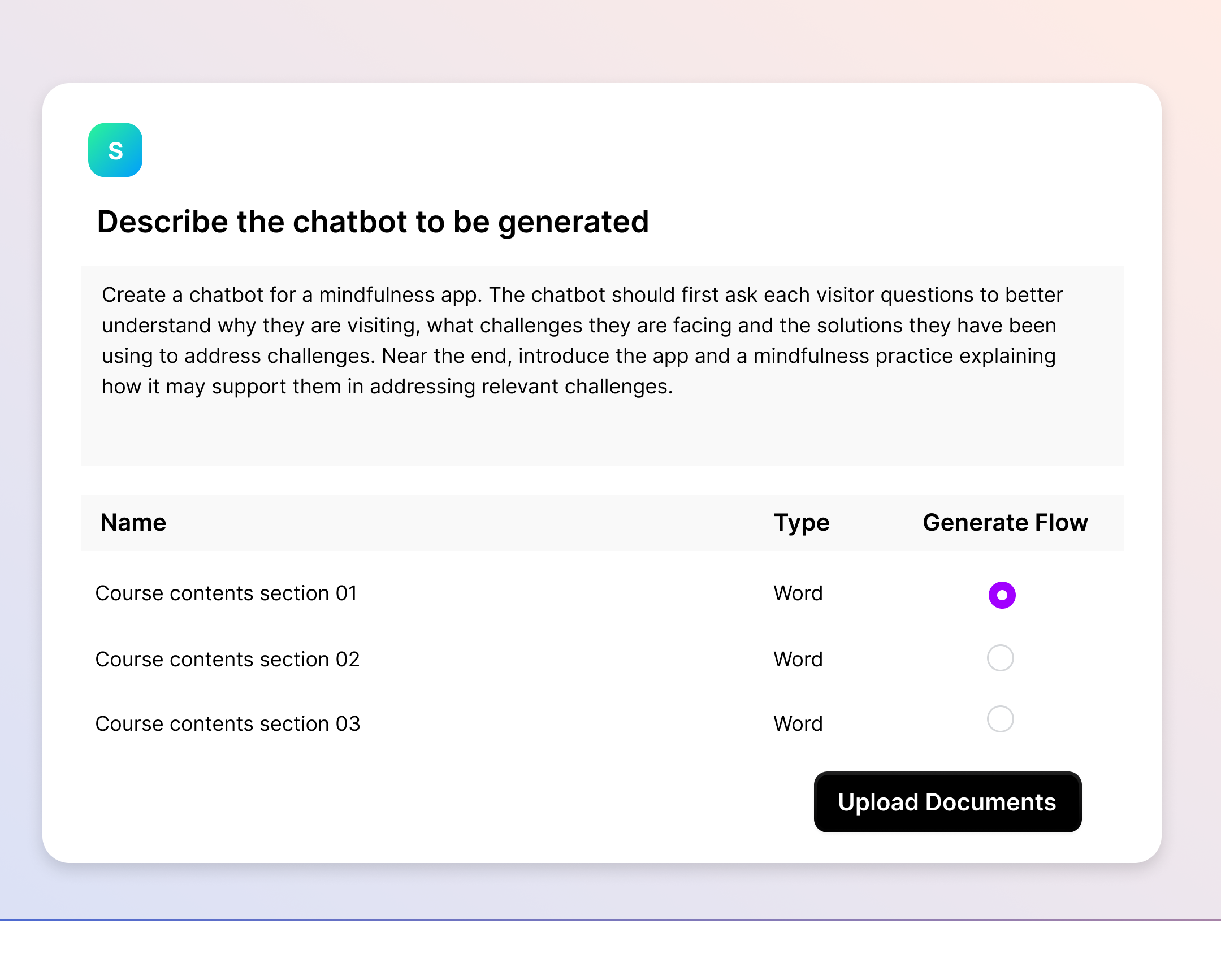
Design step UI
2. Develop

IT professionals use APIs or custom functions to connect AI agents with backend systems and build new AI capabilities to scale and improve its performance.
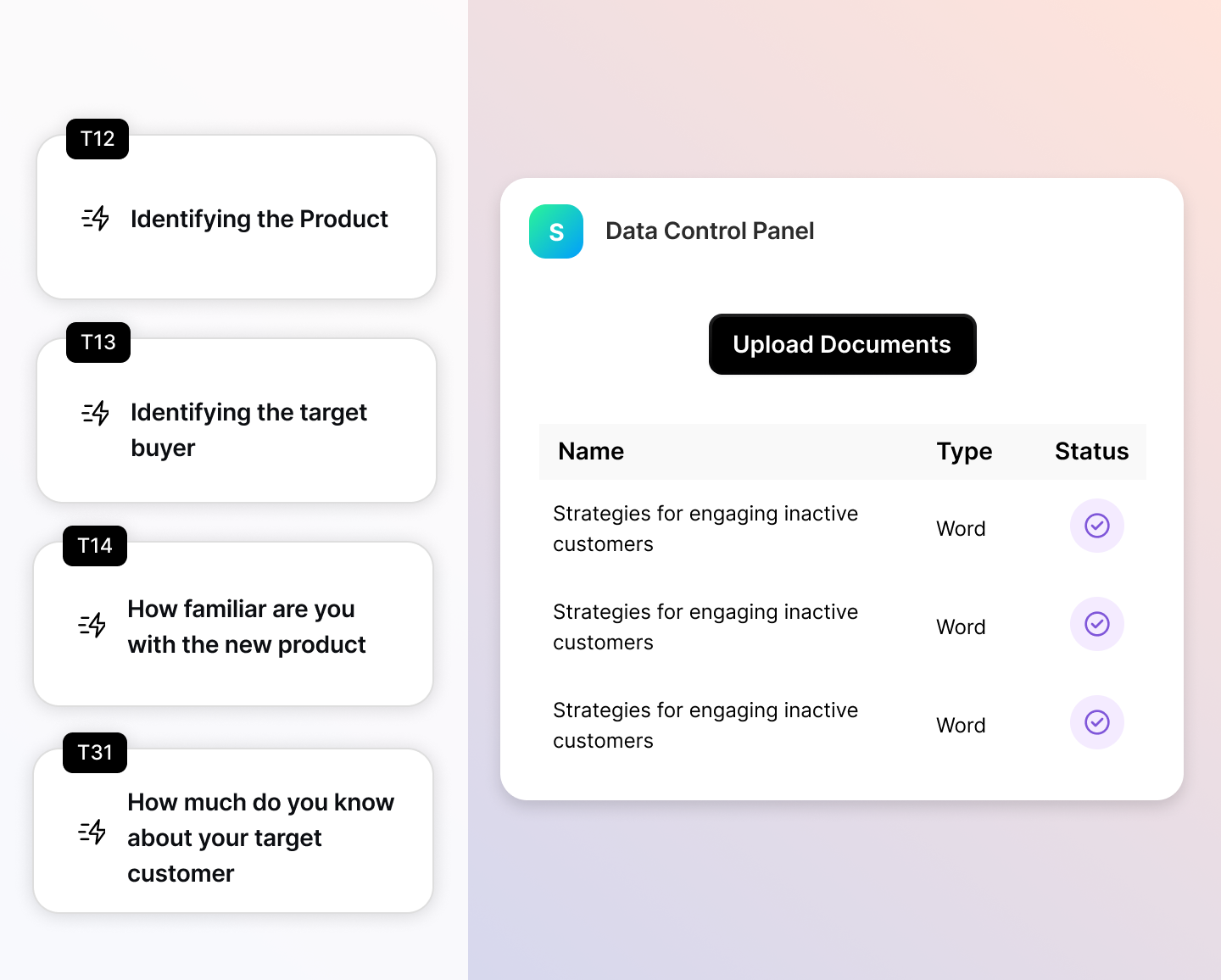
Develop step UI
3. Deploy

Fast ways to deploy AI agents across channels via one-click, JavaScript, and API that embeds them into proprietary web, mobile, or voice applications.
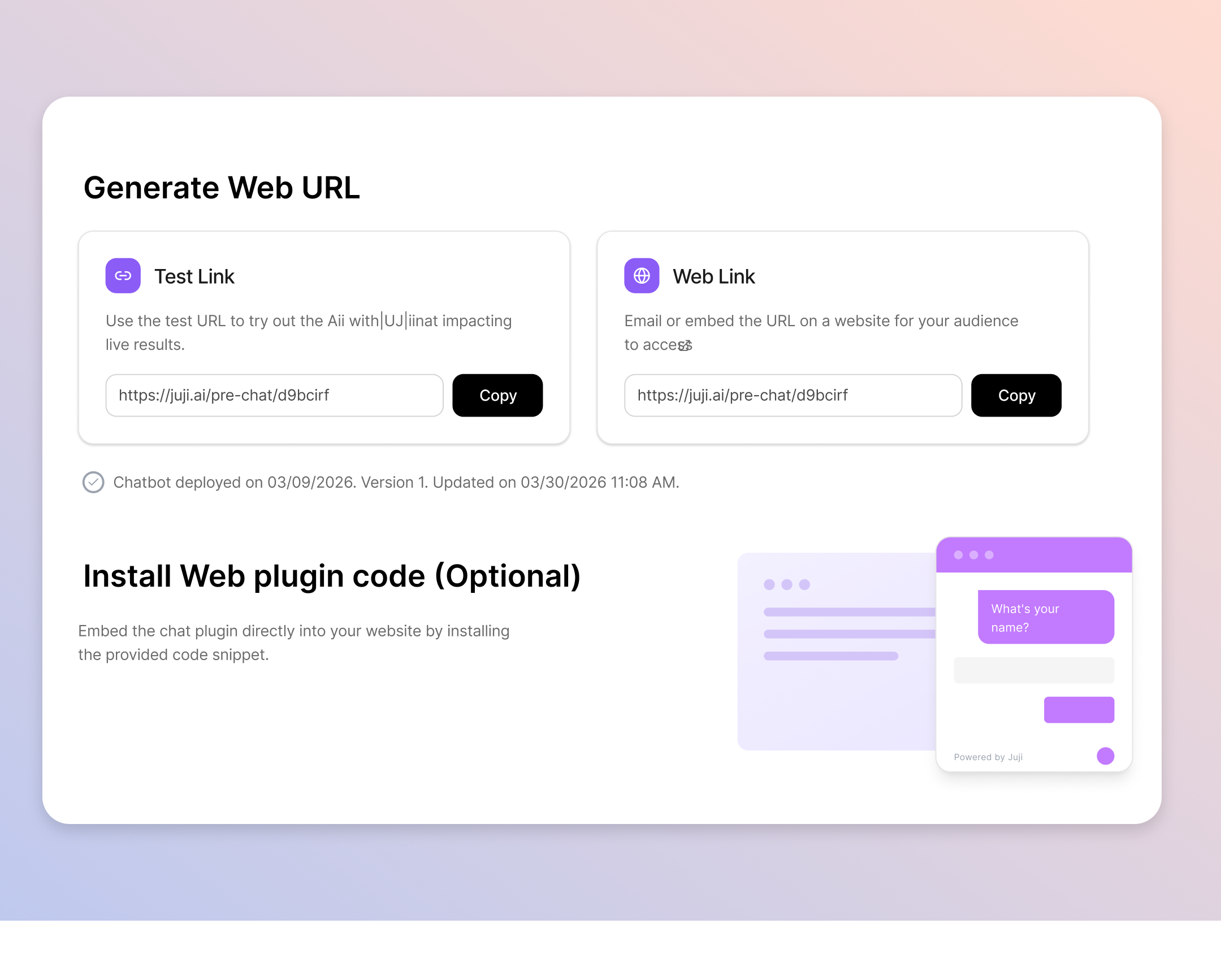
Deploy step UI
4. Monitor & Update

AI supervisors use real-time dashboards to continuously monitor and improve AI agent behavior and performance.
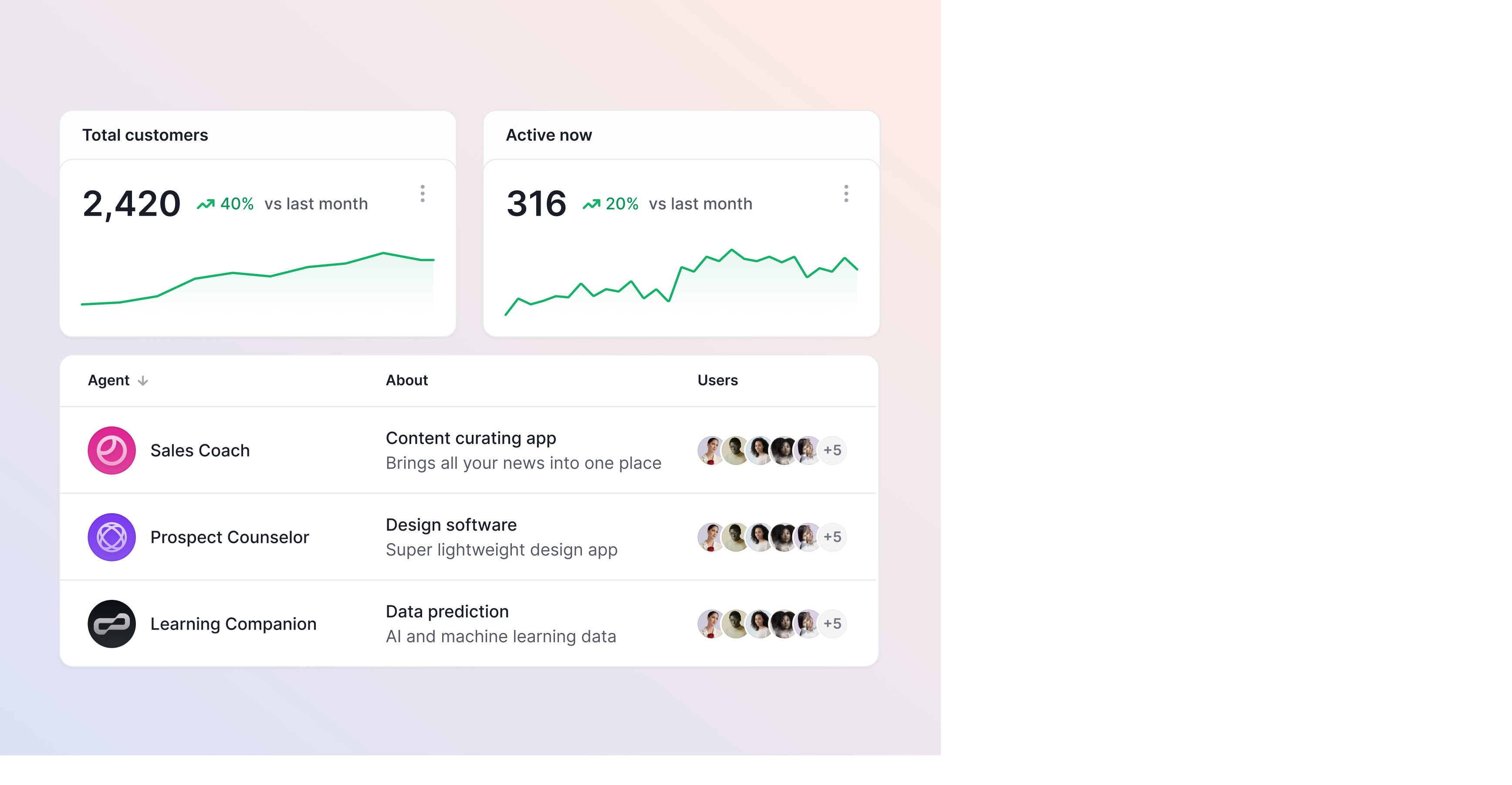
Monitor & Update UI

What Can be Customized and Why

Shape AI around your business — how it behaves, what it knows, and how it delivers.

Brand Experience
Brand Experience
Customize an agent's name, communication style (e.g., a cheerful vs. a serious personality), and visual identity.
Why: Ensure the AI agent reflects your brand and delivers a consistent, on-brand experience.
Intelligence
Intelligence
Define how intelligence is applied to guide an agent's behavior, such as optimizing for task completion vs. user satisfaction, and how user insights can build customized profiles.
Why: Align AI decision-making with your specific business objectives and user needs.
Safety & Guardrails
Safety & Guardrails
Configure various guardrails to set boundaries on what the agent can and cannot do, including policies, compliance rules, and risk controls.
Why: Ensure safe, compliant AI operations that maintain trust and mitigate risk across all contexts.
Knowledge & Data
Knowledge & Data
Integrate business workflows and enterprise data sources (e.g., product catalogs, CRM, pricing systems) that an agent uses to operate.
Why: Ground AI agents in your real business data to ensure accurate, contextually relevant responses.

How Our Platform Stands Out

Purpose‑built AI that delivers clarity, confidence, and consistently better outcomes.

Leadership in human-centered approach to AI
Powers a reinvention engine for becoming human-AI fused enterprises, future-proofing talent and long-term business vitality.
Out-of-the-box, hybrid AI advantage
Our generative + cognitive AI optimizes AI task performance, user experience, and AI safety and compliance at the same time.
Open, extensible agentic AI platform
Enables organizations to integrate with existing systems, accelerate innovations within, and provide sustainable AI ROI.
Superior, no-code agent tooling
Superior, no-code tooling for building and managing advanced AI agents without requiring specialized engineering talent.

The Anatomy of the Platform

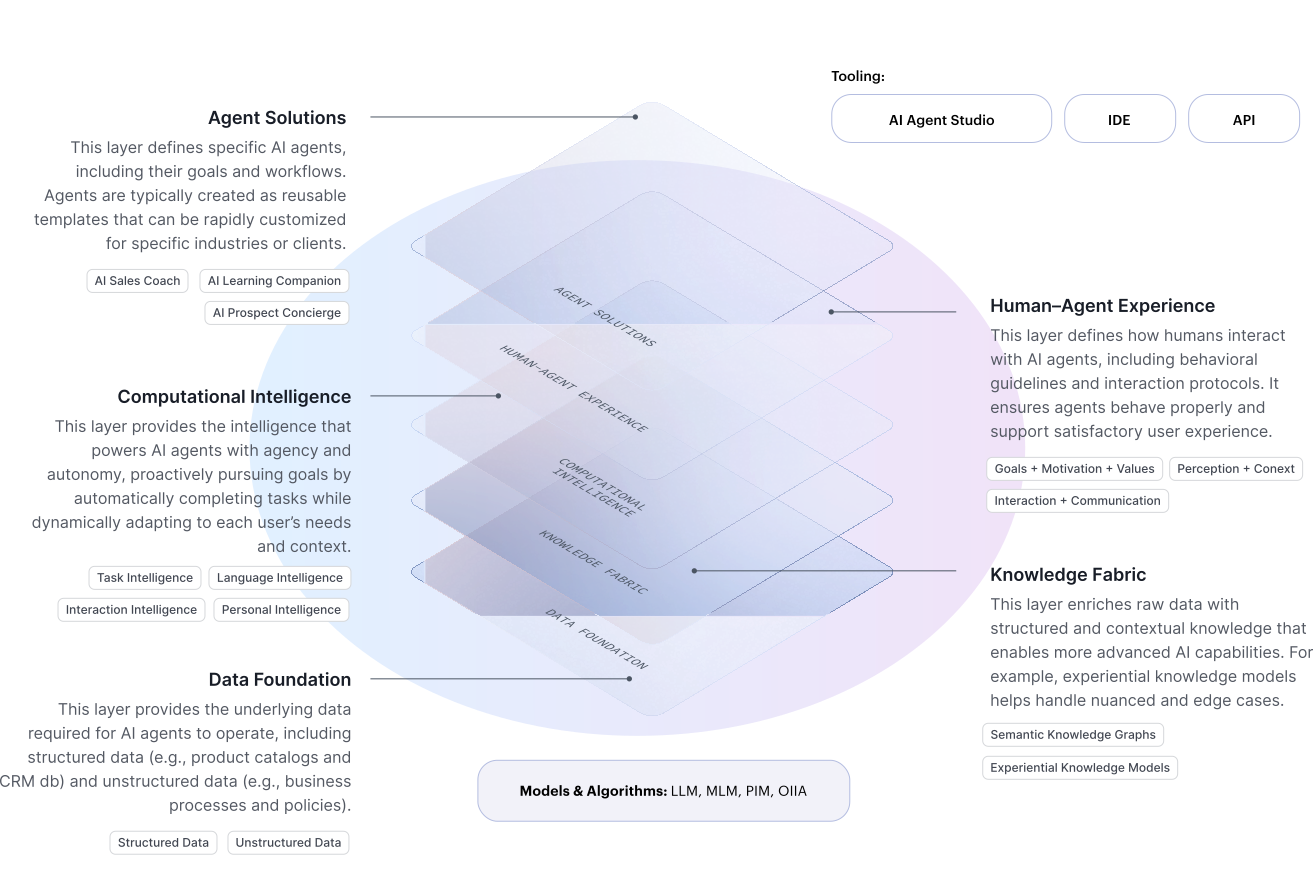
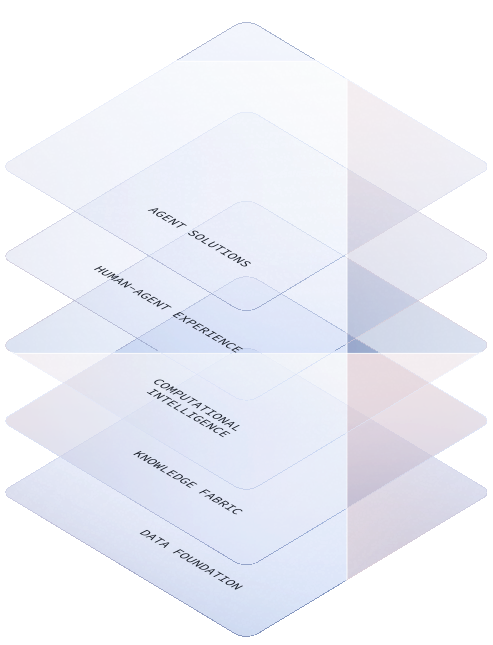
Not all agentic platforms are created equal. Our platform empowers AI agents with multiple cognitive intelligences in a hybrid AI Framework, delivering greater adaptability and safety.

Platform anatomy overview showing architecture and components
Tooling:
AI Agent Studio
IDE
API
Detailed platform anatomy
Models & Algorithms:LLM, MLM, PIM, OIIA
Agent Solutions
This layer defines specific AI agents, including their goals and workflows. Agents are typically created as reusable templates that can be rapidly customized for specific industries or clients.
AI Sales Coach
AI Learning Companion
AI Prospect Concierge
Human–Agent Experience
This layer defines how humans interact with AI agents, including behavioral guidelines and interaction protocols. It ensures agents behave properly and support satisfactory user experience.
Goals + Motivation + Values
Perception + Context
Interaction + Communication
Computational Intelligence
This layer provides the intelligence that powers AI agents with agency and autonomy, proactively pursuing goals by automatically completing tasks while dynamically adapting to each user’s needs and context.
Task Intelligence
Language Intelligence
Interaction Intelligence
Personal Intelligence
Knowledge Fabric
This layer enriches raw data with structured and contextual knowledge that enables more advanced AI capabilities. For example, experiential knowledge models helps handle nuanced and edge cases.
Experiential Knowledge Models
Semantic Knowledge Graphs
Data Foundation
This layer provides the underlying data required for AI agents to operate, including structured data (e.g., product catalogs and CRM db) and unstructured data (e.g., business processes and policies).
Structured Data
Unstructured Data
Multiple Cognitive Intelligences

Multiple Cognitive Intelligences

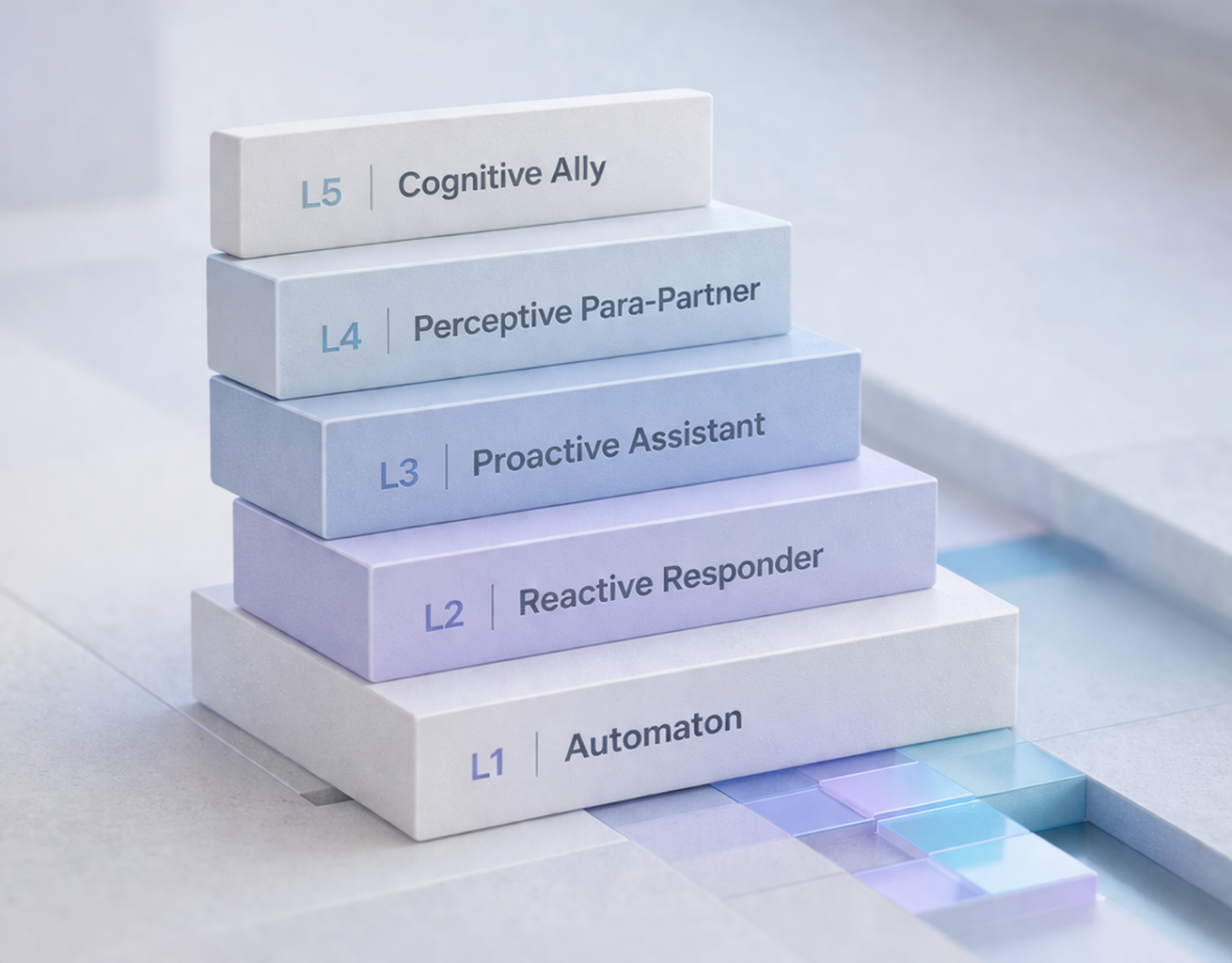
Just like autonomous driving, AI agents can be graded on five levels by their level of intelligence and capabilities, targeting different levels of goals and requiring different types of human talents.

While our platform supports the creation of AI agents from L1 to L4, we have focused on developing multiple intelligences that are required for higher-level AI agents (L3–L5).

AI That Understands and Adapts to Individuals

AI agent chat interface with interactional intelligence
"Language didn't make interactional intelligence possible, it is interactional intelligence that made language possible as a means of communication"
- Stephen Levinson
Personal Intelligence visualization
SC
AI Sales Coach
May I stress a few talking points based on my understanding of you?
Tom
Sure. Go ahead.
"If you wish to persuade me, you must think my thoughts, feel my feelings, and speak my words" - Cicero
Hybrid AI Framework

Hybrid AI Framework

While many agentic AI platforms are LLM-centric, our platform is built on a hybrid AI framework designed to support more robust and reliable agents. At its core is a task-centric structure that integrates symbolic AI, classical algorithms and machine learning, and generative AI (LLMs).

Like building a robot, this task-centric structure together with symbolic AI and classical algorithms forms the "spine" or "skeletal structure" of an AI agent. This structure ensures the agent operates within defined boundaries by adhering to business protocols and safety policies.

Generative AI (LLMs) is then grafted onto this structure as an agent's "flesh and blood," enabling the agent to dynamically adapt its behavior to each user and context.

The hybrid AI framework enables safe, adaptive AI agents while avoiding the 'whack-a-mole' tuning issues common in LLM-centric approaches.

Integration and Extensibility

Our platform can leverage various large language models (LLMs) and supports easy integration of an AI agent with existing systems, such as third-party databases, eco-system partner systems, and hyper-scaler cloud infrastructure.

Amazon Amazon
Microsoft Microsoft
Google Google
OpenAI OpenAI
Anthropic Anthropic
Databricks Databricks
Snowflake Snowflake
SAP SAP